
Health and Safety Policy for Business Waste Removal Hainault
Purpose: This policy sets out the health, safety and welfare commitments of our commercial rubbish removal team and the responsibilities that support safe operations across the entire rubbish company service area. The document applies to all staff, contractors and any persons affected by our waste removal activities and operations, including collections, transfers and on-site clearance in business environments.Scope and Objectives
Our aim is to provide a reliable waste removal service while minimising risk to people, property and the environment. This policy covers routine and non-routine tasks performed by the waste removal business, including handling, transport and disposal of general business waste, recyclables and any identified hazardous items. We commit to continuous improvement, compliance with relevant safety standards and providing a safe service in the wider rubbish pickup and commercial waste service area.
Key Responsibilities
Management shall ensure risk assessments, safe systems of work and adequate resources are in place. Supervisors are to brief crews, monitor compliance and record any unsafe conditions. Drivers and operatives must follow safe operating procedures, wear prescribed personal protective equipment (PPE) and report incidents without delay. All personnel are required to cooperate with training and internal auditing to maintain a culture of safety.Risk Assessment and Control Measures
We will perform documented risk assessments for common tasks such as manual handling, vehicle loading, use of lifting equipment and site access for business waste clearance. Control measures include proper lifting techniques, mechanical aids, segregation of hazardous materials, safe vehicle loading practices and traffic management for on-street and on-site operations. The policy emphasises the use of a hierarchy of controls: eliminate, substitute, engineer, administrate and use PPE. To support the rubbish collection and commercial waste service area, risk controls will be tailored to each client site.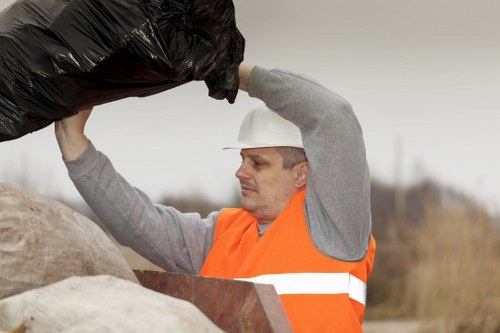 Training, Competency and Communication — All staff will receive induction and periodic refresher training in manual handling, hazardous waste awareness, vehicle safety, emergency procedures and behavioural safety. Competency checks will be carried out for drivers and machine operators. Communication channels include pre-job briefings, toolbox talks, signage and accessible safety documentation. We promote an open reporting culture where near-misses and hazards are logged and acted upon to prevent recurrence across the rubbish company operations.
Personal Protective Equipment and Hygiene
The organisation will supply and maintain appropriate PPE such as high-visibility clothing, gloves, safety boots and eye protection. PPE is a last line of defence and must be used in conjunction with engineered and administrative controls. Hygiene facilities and procedures will be provided to prevent contamination from waste materials; vehicles and equipment will be cleaned regularly to reduce health risks to staff and clients within our waste removal coverage area.Operational Safety and Vehicle Management Vehicles will be maintained to the highest standards and inspected before use. Safe loading limits will be observed and vehicle stability will be preserved by correct stacking and securement of loads. Drivers will adhere to safe working hours, road traffic laws and safe driving practices. When operating on client premises, crews will respect site-specific rules and co-ordinate with on-site managers to manage vehicle access and pedestrian protection.
 Handling Hazardous and Controlled Wastes — When hazardous or restricted wastes are identified, the appropriate classification, packaging and transfer procedures must be followed. Only trained personnel will handle hazardous items and specialist contractors will be engaged where necessary. Documentation such as consignment notes and hazardous waste transfer records will be completed in accordance with regulatory expectations to ensure traceability and safe disposal from the commercial rubbish and waste collection area.
 Incident Reporting, First Aid and Emergency Response — All accidents, incidents and near-misses must be reported immediately and recorded. First aid provisions will be available and staff trained in immediate response. Emergency procedures for spills, fires or injuries are defined and rehearsed. Investigation of incidents will identify root causes and corrective actions to prevent repetition. Lessons learned will inform updates to this health and safety policy and operational procedures.
Contractors, Competence and Monitoring
Contractors engaged to support any element of the service must demonstrate competence, provide method statements and evidence of training and insurance. The company will monitor performance through audits, spot checks and review of safety records. Key performance indicators will include incident frequency, training completion rates and findings from vehicle and equipment inspections relevant to the business waste removal operations.Environmental and Community Considerations
We are committed to minimising environmental impact by promoting recycling, correct segregation of materials and preventing pollution during collections and transfers. Noise, dust and traffic disruption will be managed through scheduling and the use of appropriate equipment to reduce disturbance to neighbouring premises across our service area.Review and Continuous Improvement This policy is reviewed at defined intervals and revised following significant incidents, legislative change or operational adjustment. Staff and stakeholder input will be sought to ensure the policy remains practical and effective. Ultimately, our goal is a safe, compliant and professional rubbish removal service that protects people, property and the environment within the commercial waste removal area we serve.
